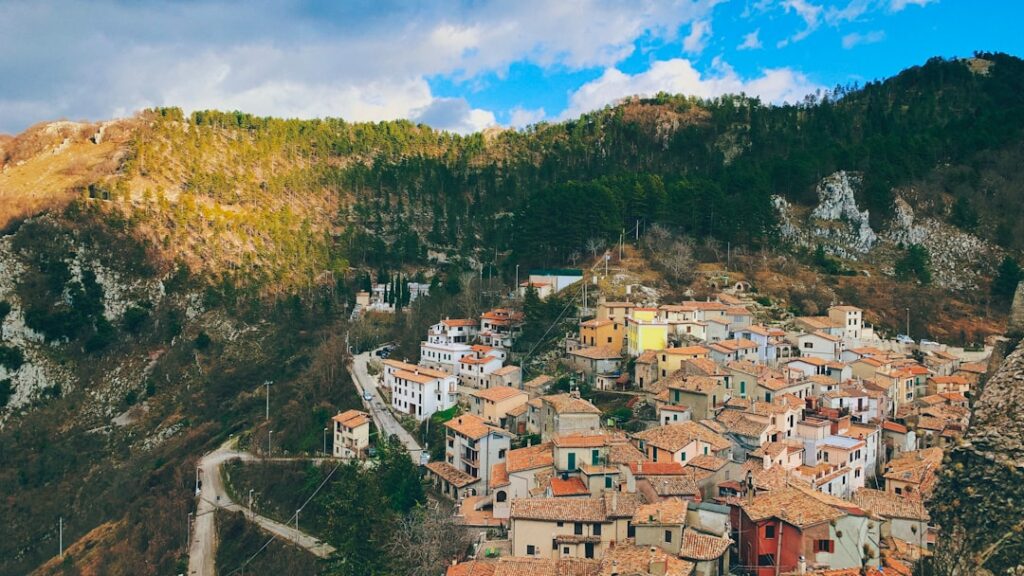





Introduction: Stepping into Time — Civita di Bagnoregio, the Village You Discover by Crossing the Bridge
Civita di Bagnoregio is one of those lasting images of Italy: a village perched on a tuff spur, isolated and threatened by erosion, reachable only via a pedestrian bridge suspended above a lunar-like landscape. Located in the Lazio region, in the province of Viterbo, Civita is often nicknamed « the dying town » (la città che muore) because of the geological fragility of its base. Yet paradoxically, it’s full of life — tourists, artisan workshops, tiny trattorie and tucked-away historical corners that tell centuries of stories.
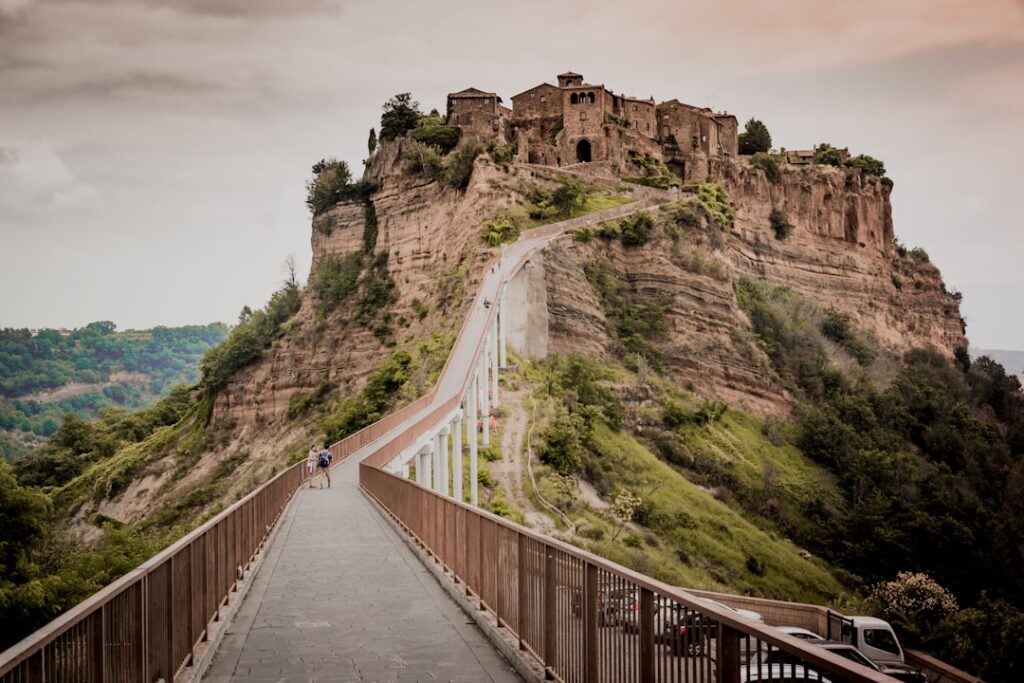
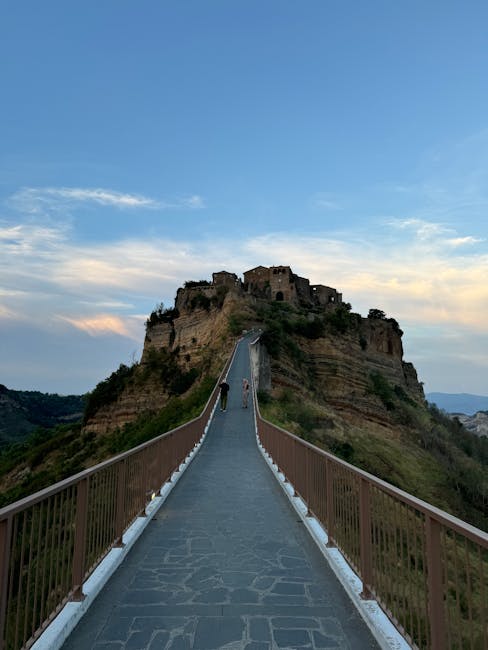
Crossing the bridge into Civita feels like passing a border: from the modern world to cobbled medieval lanes, from the valley’s voices to the old bells of Piazza San Donato, from parking lots and buses to the hush of little chapels. The walk itself is a contemplative experience: the winding footbridge frames spectacular photographic views of the cliffs, the ravines and the village’s ochre rooftops. As you approach, you can already make out the silhouette of the Chiesa di San Donato dominating the small central square, its bell tower, and the tightly packed houses huddled like a shelter against the wind.
But Civita is more than a postcard. It’s a living micro-territory where residents and visitors coexist with a geological fragility that demands respect. Local authorities have set access rules, a ticketing system, and periodic restoration works to stabilize ruins and preserve authenticity. Local associations — often made up of people from the surrounding villages — organize guided tours, temporary exhibitions and craft workshops that help explain the tuff and the landslides (frane) that have shaped, and continue to threaten, this place.
This article is an immersive, practical guide to visiting Civita di Bagnoregio: how to prepare before crossing the bridge, the must-see sights (with exact addresses, opening times and indicative prices), where to eat, the best photographic vantage points, and practical tips for a respectful visit that honors the village and its people. Whether you’re a photographer, hiker, history buff or a romantic traveler, the crossing into Civita is a unique moment — a slow transition from the noise of the world to the murmur of the stones.
The Bridge, the Entrance and First Steps: Access, Tickets and First Impressions
The only approach to Civita is on foot via the pedestrian bridge inaugurated in 1965 (replacing older access routes), which connects modern Bagnoregio to the ancient village. Main access address: Via Roma, 01022 Bagnoregio VT, Italy (the usual starting point from the car parks). The recommended main car park is the « Parcheggio Zona Belvedere » located on Viale Garibaldi, Piazza San Donato, 01022 Bagnoregio VT — this is often where the ticket booth for the crossing is located.
Ticketing and prices: Access to Civita requires a ticket with an indicative price of €5.00 per adult (standard rate), €3.00 reduced (students, seniors) and free for children under 6. Group rates may apply and some times of day in high season may require online reservation. Ticket office hours are generally: 09:00–18:00 from March to October, and 09:00–16:00 from November to February, with variations depending on weather and local holidays. Important: these hours and prices can change; check the Pro Loco di Bagnoregio website or the Tourist Office before you go.
The crossing is meant to be slow and deliberate: it’s best to take your time and be mindful of elderly people and children. The bridge is about 300 meters long and offers clear views over the Valle dei Calanchi and the tuff base. The surface can be slippery after rain, so wear closed shoes with good grip. Cyclists: bringing a bike into the village is discouraged and often prohibited to preserve the quiet of the lanes and for safety reasons.
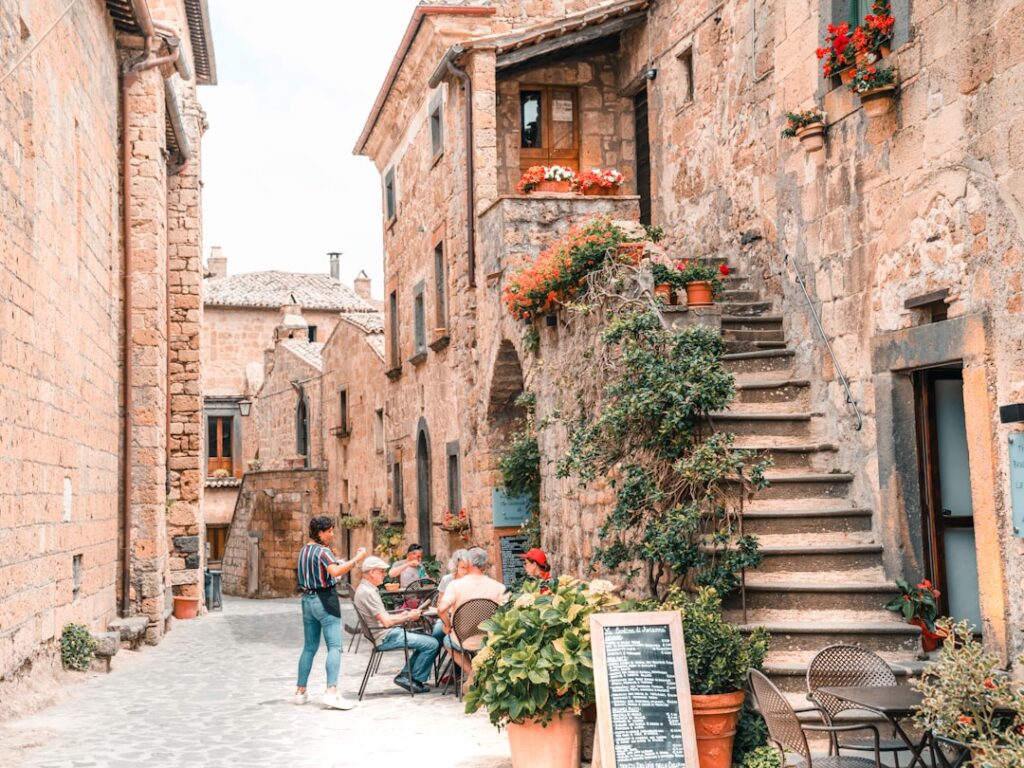
First impressions on arrival: the Porta Santa Maria, the medieval gateway, immediately creates a sense of intimacy. Past the gate you’ll find steps and sloping lanes that lead up to Piazza San Donato where the Chiesa di San Donato stands (Piazza San Donato, 01022 Civita di Bagnoregio VT). Take time to soak up the atmosphere: craft shops, ceramic studios, small galleries and informational panels explaining the geological phenomena that shaped the « città che muore. »
Monuments and Must-See Spots: History and Exact Addresses
Chiesa di San Donato — Piazza San Donato, 01022 Civita di Bagnoregio VT. This parish church, with origins dating back to the Middle Ages, occupies the village’s central square. The building has a modest façade and an interior that preserves Romanesque and Baroque elements. Opening hours: generally 10:00–17:00 (may vary with religious celebrations). Entrance is free but donations are appreciated for maintenance. Highlights: an ancient altarpiece, a view over the valley from the forecourt, and the bell tower visible from the bridge.
Porta Santa Maria — the old gateway to the village, located at the end of the bridge. The arch of the gate shows traces of successive restorations. This is often where guides explain the calanchi (ravines) and the tuff phenomenon. No specific postal address — it sits right at the end of the bridge, just before the entrance to the historic lanes.
Museo Geologico e delle Frane — Via Cavour, 1, 01022 Bagnoregio VT. This small museum dedicated to local geology and the history of landslides provides a scientific understanding of the site. Hours: 10:00–13:00 and 15:00–18:00 (high season), closed in bad weather; indicative entrance fee: €3.00 adult, €1.50 reduced. The museum features models, historic photographs and explanatory panels in Italian and English. It’s a great visit to understand why Civita is fragile and what conservation efforts are underway.
Palazzo Alemanni and Historic Houses — scattered through the lanes, these tuff palaces and homes often bear plaques with dates and names of old families. Addresses: Via del Torrione and Via Roma (interior lanes). They can sometimes be partially viewed depending on private openings and temporary exhibitions. The façades, carved wooden doors and mullioned windows are perfect subjects for architectural photography.
Where to Eat, Sleep and Local Practical Tips
Eating in Civita offers a rustic, authentic experience: small trattorie, cafés and stalls selling local products. Trattoria « Il Panificio » (Piazza San Donato, civico 2, 01022 Civita di Bagnoregio VT) is known for its homemade pasta and bruschette: main courses about €8–15, antipasti €4–8, coffee €1–2. Hours: 12:00–15:00 and 19:00–22:00 (often closed on Mondays off-season). Osteria « La Cantina del Gallo » (Via della Rocca, 01022 Civita di Bagnoregio VT) serves seasonal dishes and a short list of regional wines: average prices €12–25 per person.
Local products to try: pecorino della Tuscia cheese, honey from the surrounding hills, and regional wines (although the famous Est! Est!! Est!! area isn’t far, Lazio offers lesser-known wines full of character). Buy artisanal shortbread cookies from the small shops as an edible souvenir. Many businesses accept card payments but bring some cash for crafts and small purchases.
Accommodation: Civita has a very limited number of guest rooms and apartments. If you want to stay inside the village itself (a rare and sought-after experience), book several weeks in advance. Example address: « B&B La Porta » (Via del Comune, 01022 Civita di Bagnoregio VT) — indicative rates €70–120/night depending on the season. A practical alternative is to stay in Bagnoregio (the modern town) — several hotels and B&Bs around Piazza Vittorio Emanuele II, 01022 Bagnoregio VT, about a 5–10 minute drive from the bridge.
Local practical tips:
- Best time to visit: spring (April–June) and autumn (September–October) to avoid summer heat and peak crowds.
- Shoes: comfortable closed shoes with grippy soles for cobbles and stairs.
- Accessibility: the village has slopes and steps; wheelchair access is very limited. Check ahead if you have specific needs.
- Photography: sunrise and sunset provide spectacular light. Respect the village’s calm: no drones without permission.
- Respect the residents: avoid loud noise in narrow lanes, observe quiet hours and private properties.
Routes and Nearby Activities: Day Trips from Civita in Lazio
Civita di Bagnoregio is an excellent base for day trips around Lazio. Here are several suggested routes and activities to extend your visit.
1) Visit Bagnoregio and the Belvedere — Piazza Vittorio Emanuele II, 01022 Bagnoregio VT. Before or after crossing the bridge, head to the belvedere for a panorama of Civita from the opposite side; this is a classic must-have photo. The belvedere is open 24/7 and offers platforms to observe the erosion and the ravines (calanchi).
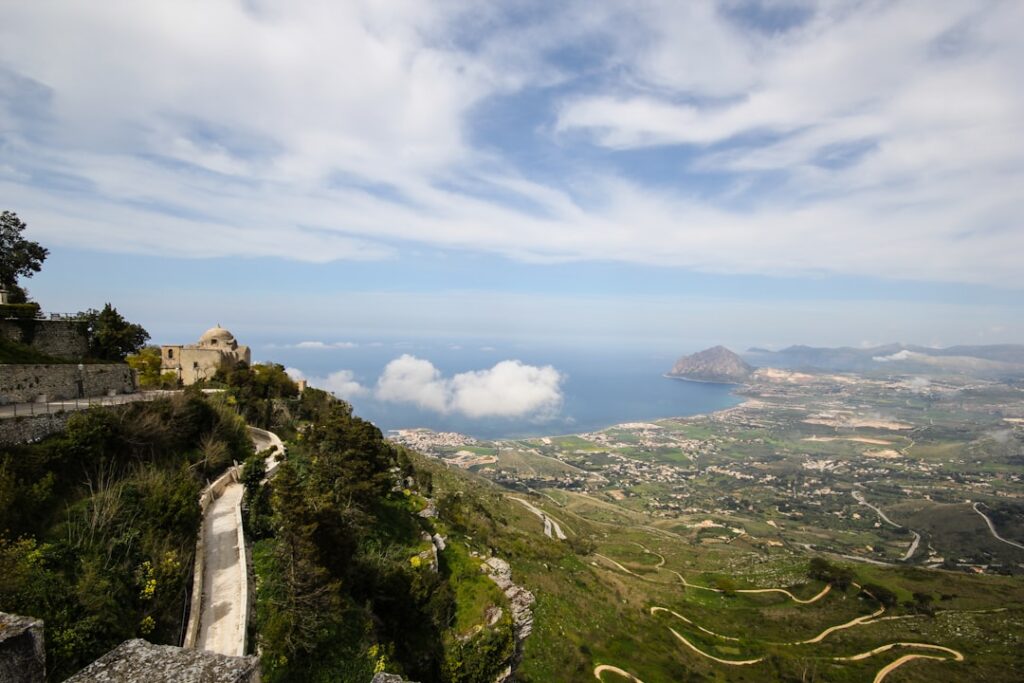
2) Valle dei Calanchi Natural Park — access via secondary roads leading toward the Viterbo area. Hikes are recommended with a topographic map; some sections are unmarked, so bring water, a paper map and a GPS. Duration: 1 to 4 hours depending on route. Geological points of interest and Mediterranean flora observation.
3) The city of Viterbo — Piazza San Lorenzo, 01100 Viterbo VT (about 40 km). Medieval Viterbo has thermal baths, a Papal Palace (Palazzo dei Papi, Piazza San Lorenzo 1) and well-preserved medieval streets. Palazzo dei Papi hours: 10:00–18:00, entrance fees vary (often around €7–10). It’s a rich complementary experience in papal history and Romanesque-Lombard art.
4) Lakes Bolsena and Vico — for a lakeside escape, Lake Bolsena (Strada Litoranea, 01023 Bolsena VT) is about a 30-minute drive; swimming, beaches and lakeside villages for a meal by the water. Several small public beaches and restaurants offer main courses starting around €12.
Logistics tips: a car is the most practical way to explore from Civita, but secondary roads are narrow and sometimes winding. Public transport exists (regional buses from Viterbo and Orte) but schedules are limited. Plan your return trips in the late afternoon if you rely on buses. Also, always carry water, a small first-aid kit and a camera with charged batteries: photo opportunities are abundant.
Conclusion: The Experience of Crossing the Bridge — Why Civita Remains Unforgettable
Crossing the bridge into Civita di Bagnoregio is not just a physical act but a symbolic ritual: you leave the contemporary world behind and step into a fragile, sublime piece of history. The crossing concentrates a range of emotions — admiration for the landscape, respect for geological vulnerability and curiosity for the human stories written in the stones. Civita is an open-air laboratory where you can measure the relationship between people and nature, time and erosion.
Visits to landmarks like Chiesa di San Donato, the medieval gate Porta Santa Maria, and the Museo Geologico e delle Frane help explain that Civita is as much a historical monument as it is a living geological site. The addresses I’ve listed — Piazza San Donato for the church, Via Cavour for the museum, Via Roma for the bridge access — should help you plan your day. Don’t forget to check updated hours and prices before your visit, since site management may change with the seasons and conservation work.
Beyond the monuments, it’s the day-to-day life of the village — the artisans, the small tables, the laughter in the square — that gives the experience its meaning. Respect the place: follow local rules, don’t leave litter, don’t monopolize public spaces and support the local economy by buying a handcrafted product or sharing a meal at a neighborhood trattoria. Finally, if you’re a photographer, consider staying until sunset: the light turns the tuff walls into deep ochres and the shadows create perfect graphic compositions.
Civita di Bagnoregio is a lesson in patience and contained beauty — a spot where you learn to look and to listen. When you cross the bridge, remember you’re a temporary guardian of this site: your behavior today helps preserve it for future generations. Safe travels, and may your crossing be gentle, inspiring and respectful.