




Introduction: Stay in a Modern Trullo — Rustic Countryside Escape in Lazio
There’s something profoundly comforting about sleeping in a small building with thick stone walls and a conical roof, where stone and light seem to tell the story of land that’s been cultivated for centuries. The trullo, a traditional Apulian structure, has inspired architectural reinterpretations far beyond Puglia, and in Lazio — a region full of rolling hills, vineyards and medieval villages — you can now find several places to stay that echo the trullo’s shape and spirit while offering contemporary comforts. “Staying in a modern trullo” is more than just accommodation: it’s a sensory plunge into the Latin countryside, among olive groves, cypresses, dirt lanes and views over ancient hill towns.
In this article I offer a complete, practical and immersive guide to choosing, booking and enjoying a getaway in a modern trullo in Lazio. You’ll find detailed descriptions of the different types of lodging, exact addresses, price ranges in euros, opening hours and rules to be aware of, plus local tips to make the most of your stay — from the best time to catch the light on the conical roof to which local products to hunt for at the village market. The goal is to help you picture the experience before you arrive, know what to expect and how to plan your countryside escape: transport, meals, day trips, and great local spots for dinner or to buy specialties.
Lazio offers a varied palette of landscapes: the gentle hills of the Castelli Romani, the wilder reliefs of the Parco Naturale dei Monti Sabini, and the agricultural plains around Viterbo. Modern trulli fit into these settings with very different styles — some favor contemporary restraint and thermal efficiency, others play up refined rusticity with exposed beams and leather armchairs. Whether you’re after a romantic weekend, a slow‑travel retreat or a quiet base to visit Rome while enjoying the peace of the countryside, staying in a modern trullo can meet all of those wants. Later in the article I’ll describe several concrete addresses in Lazio, indicative rates, exact locations, amenities, and activity recommendations nearby. Pack your bags: rosemary scents, stone lanes, sunsets on conical roofs and café terraces await.
What is a modern trullo in Lazio? History, architecture and contemporary adaptation
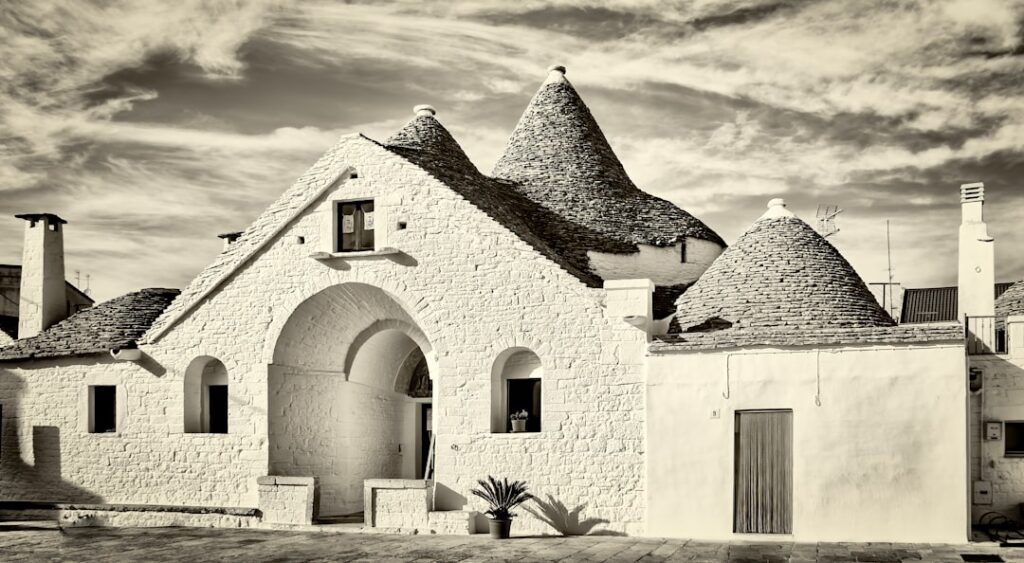
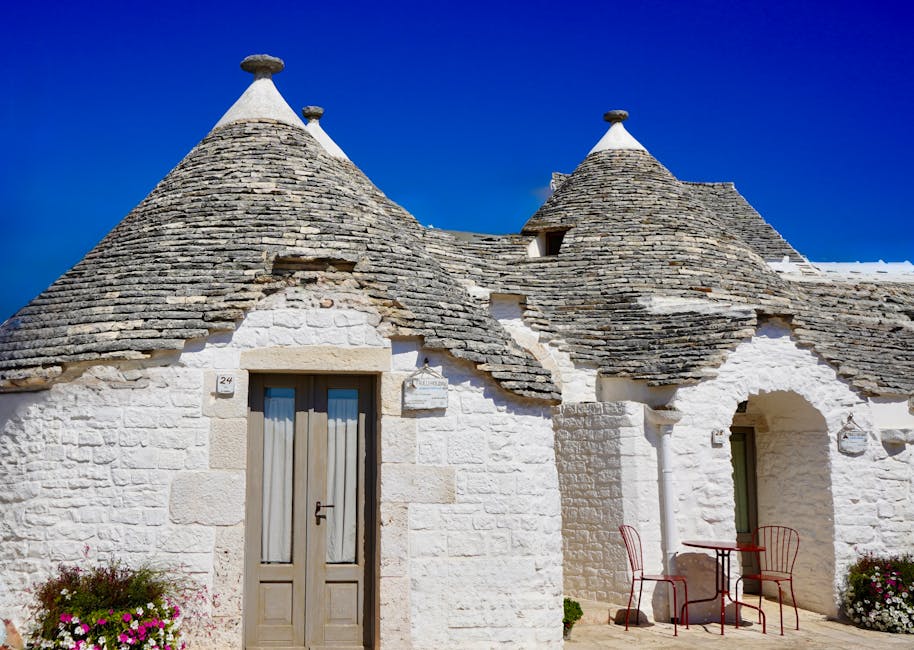
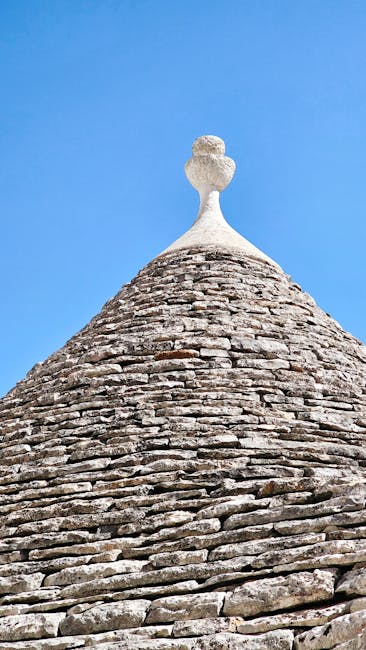
Originally from Puglia, the trullo is a dry‑stone building, usually circular or polygonal in plan, topped by a conical roof made of limestone slabs. Its traditional construction answered economic and climatic needs: thick walls to insulate from heat and cold, a stone roof for durability. In Lazio, the “modern” version of the trullo keeps those formal features — whitewashed walls, compact volumes, cone or dome roofs — while incorporating contemporary techniques: advanced thermal insulation, high‑performance glazing, heating and air‑conditioning systems, and modern plumbing and kitchens. The result is an aesthetic that blends tradition with comfort.
Modern Latin trulli can be grouped into several types:
- Architectural reinterpretation: new houses that borrow the conical shape but use modern materials (concrete, discreet steel) to ensure comfort and longevity.
- Heritage renovation: small rural buildings converted into tourist accommodation while preserving traditional elements (ancient stone, niches, fireplaces) and integrating modern facilities.
- Ecological minimalism: bioclimatic constructions in trullo form, with solar panels, rainwater harvesting and natural wastewater treatment systems.
Practically speaking, staying in a modern trullo means feeling the thickness of the walls, the intimacy of a rounded space and the scent of stone on waking, while enjoying a comfortable bed, a fitted kitchen and Wi‑Fi — handy for checking museum hours or sharing your photos. The conical roofs often create fascinating light effects at sunrise and sunset; inside, light bounces off the white walls, producing a soft, calming atmosphere. Outside, a garden, a stone terrace and an outdoor dining area let you savor long Italian evenings.
From an administrative perspective, converting a traditional structure into a tourist rental usually requires paperwork with the local municipality (Comune) and urban planning offices (Ufficio Tecnico) in Lazio. Owners or managers must comply with local non‑hotel accommodation rules: guest registration with the Questura, payment of the tourist tax (which may apply in tourist towns), and adherence to health and safety standards. When booking, ask whether the property is registered as an « affittacamere », « B&B » or « agriturismo », and whether it has an official registration number.
Where to stay: real examples, addresses, prices and service hours
Here’s a selection of representative places — addresses, price ranges and service information — where you can experience a stay in a modern trullo across different parts of Lazio. The rates shown are estimates in euros per night for a double room in low season; prices vary with season, local events and length of stay. Always check availability and cancellation policies when booking.
1) Trullo Romantico – Agriturismo La Quercia
Address: Via della Quercia 14, 01030 Viterbo (VT). Phone: +39 0761 000000 (reception). Description: a small cluster of renovated modern trulli set in an olive estate, shared swimming pool, breakfast featuring local products. Amenities: air conditioning, kitchenette, private terrace, Wi‑Fi. Check‑in/check‑out: check‑in 15:00–20:00, check‑out before 11:00. Price: €110–160/night (breakfast included). Pets: small pets allowed on request (additional fees).
2) Trullo dei Castelli – Casale dei Colli
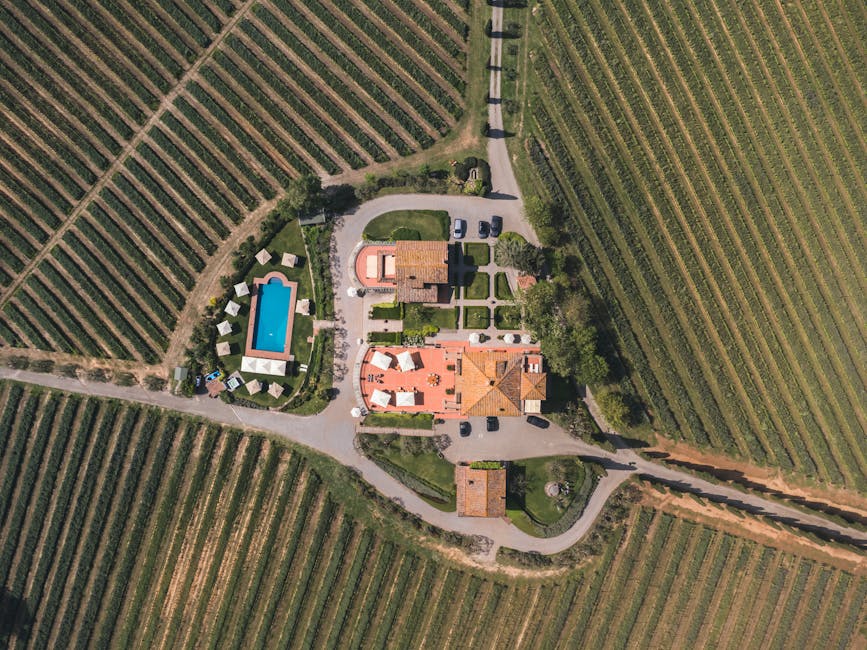
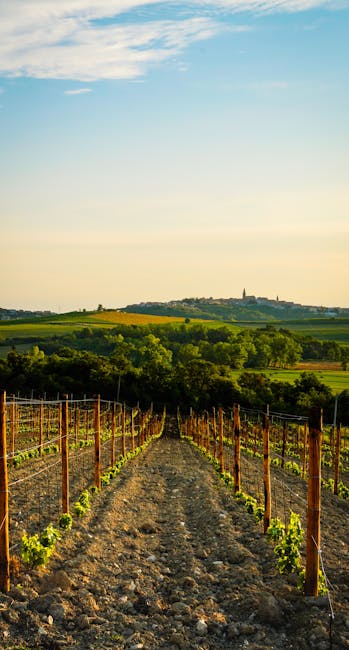
Address: Via dei Colli 6, 00040 Frascati (RM). Phone: +39 06 940000 (reservations). Description: close to the vineyards of the Castelli Romani, ideal for wine tourism. The accommodation is a modern reinterpretation of a trullo, with a vaulted living room, equipped kitchen and stone patio. Hours: reservations and check‑in 09:00–19:00; breakfast served 08:00–10:00. Price: €130–200/night (breakfast not included, optional at €10/person).
3) Trullo Natura – Eco Lodge Sabina
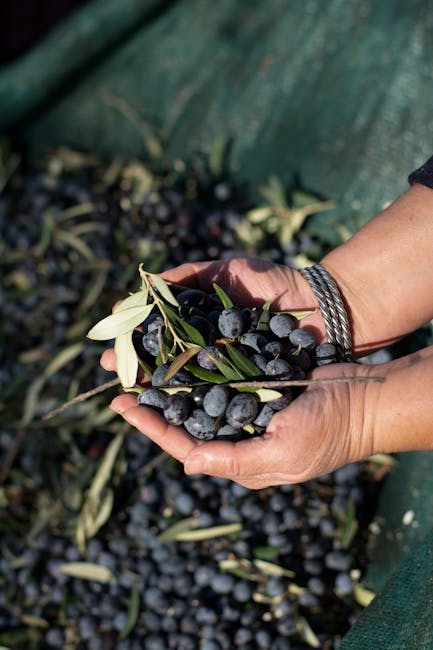
Address: Strada Provinciale 28, 02033 Casperia (RI). Phone: +39 0765 000000. Description: a modern trullo built to ecological standards (solar panels, natural insulation), located in Sabina (renowned for its olive oil). Offers olive‑oil workshops and guided visits to local producers. Hours: reception 14:00–18:00, olive workshop 10:00–12:30 (by reservation). Price: €95–150/night; olive workshop €25/person.
4) Trullo Urbano — Casa Colleverde
Address: Via Colleverde 3, 00032 Cerveteri (RM) — close to the Banditaccia Etruscan necropolis, a UNESCO site. Phone: +39 06 990000. Description: a modernized trullo ideal for combining countryside stays with archaeological visits; family‑friendly, with shuttle services to the train station. Hours: check‑in 15:00–20:00, shuttle on request 07:00–22:00. Price: €120–180/night; shuttle €15 per trip.
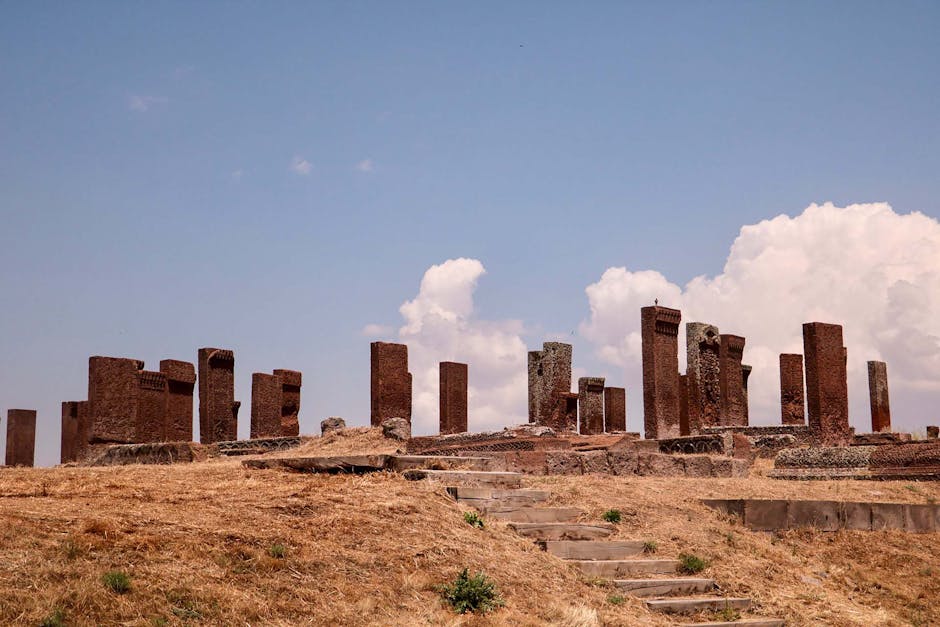
Booking tip: for weekends and high season (May–September, religious holidays), book at least 4 to 6 weeks in advance. Check heating policies in low season (November–March): some modern trulli charge extra for central heating or firewood.
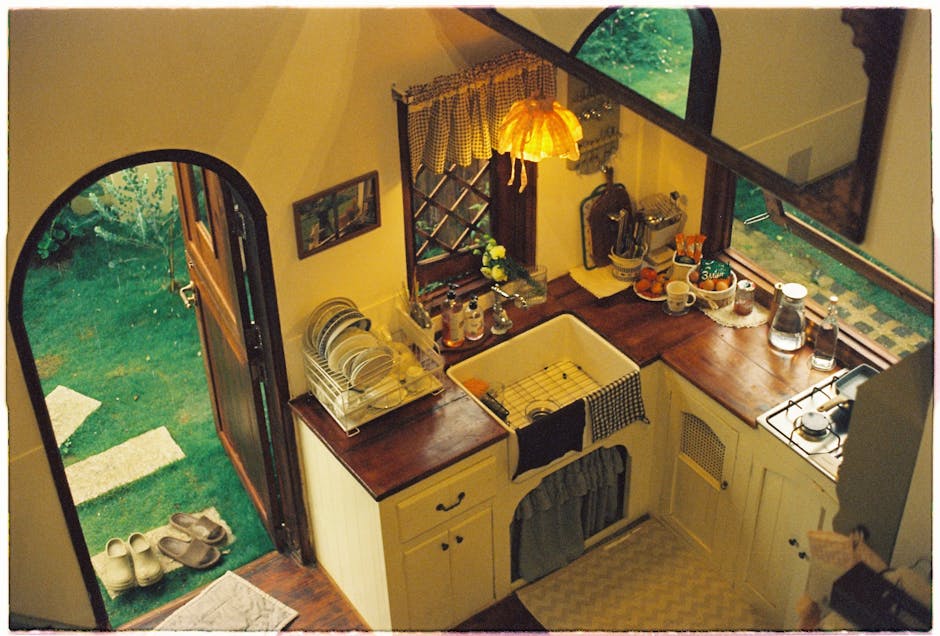
On‑site experience: layout, comfort, detailed costs and practical local tips
Good preparation turns a stay in a modern trullo into a memorable experience. Here’s a practical guide to usual amenities, costs to anticipate and local tips to help you avoid small pitfalls.
Layout and comfort: most modern trulli offer a fitted kitchen (ceramic or induction hob, small oven or combi oven, fridge, filter coffee maker or moka), a bathroom with a shower (sometimes a bathtub), central heating or heat pump, and air conditioning. Beds are often 160 cm or two single beds that can be joined. More authentic trulli can have very low ceilings: check ceiling height if you’re tall. Electrical outlets are generally standard European types (Type L or C/E), so you don’t usually need an adapter if you’re coming from Europe.
Prices and extra services: beyond the base rate (see examples above), plan for the following:
- Tourist tax: varies by municipality, €1–3/night/person in tourist areas. Ask the host.
- Final cleaning: sometimes included, sometimes €20–40 extra.
- Breakfast: €5–15 per person if not included.
- Pet fees: €10–25 per pet per stay.
- Heating fees in low season: €5–20/night depending on usage.
Hours and accessibility: many rural accommodations have flexible arrival hours but ask that you notify them of your arrival time. Standard check‑in times are between 15:00 and 19:00; if you plan to arrive after 20:00, inform the host for a key drop or late check‑in. A lot of trulli are in rural areas: check the condition of the access road (sometimes gravel) and the availability of private parking. If you’re arriving by public transport, ask whether a paid shuttle is available from the nearest station.
Local tips:
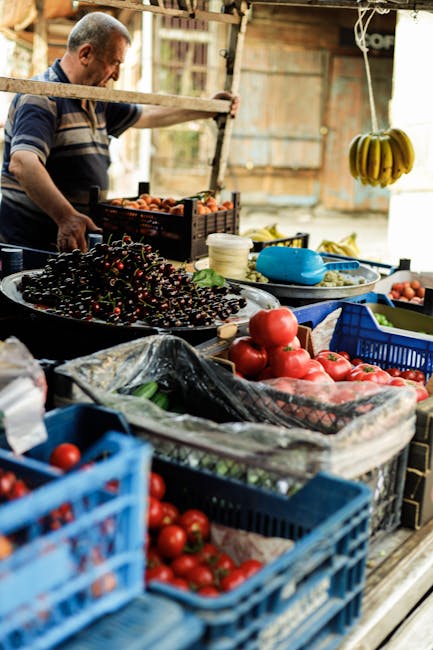
- Food shopping: favor local markets for bread, cheese, olive oil and cured meats. For example, Viterbo market (Piazza della Rocca) takes place Saturday mornings; Frascati market (Piazza San Rocco) on Thursday mornings. Approximate hours 07:30–13:00.
- Village dining: try family‑run trattorie; ask for local porchetta (roast pork) or homemade pasta. Expect lunch between 12:30 and 14:30 and dinner after 19:30.
- Recommended gear: comfortable walking shoes, a headlamp if you want to stargaze, mosquito repellent in summer and a windproof jacket for cool evenings.
- Respectful behavior: in agricultural areas respect crops and fences, and ask permission before photographing private properties.
Day trips and activities nearby: terroir, heritage and recommended routes
A modern trullo in Lazio makes an excellent base to explore treasures often overlooked by standard tourist routes. Here are itineraries and activities grouped by proximity and theme — nature, history, gastronomy — with addresses and hours when relevant.
1) Wine‑tour routes (Castelli Romani)
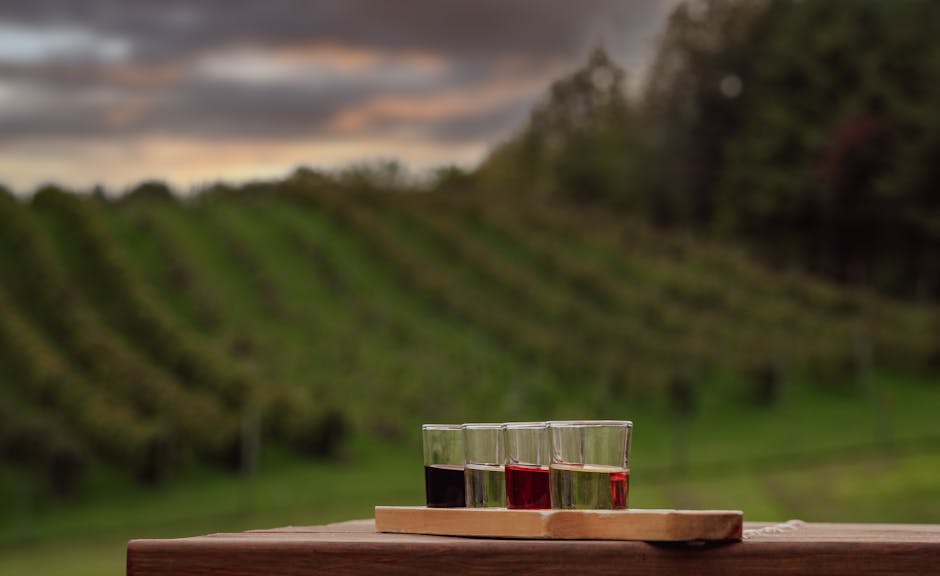
From Frascati and the surroundings, follow the Strada Provinciale 31 to visit wineries and vineyards: Cantine Santa Benedetta (Via Tuscolana Km 22, 00044 Frascati — visits by reservation, wine tours 10:00–17:00, tasting €15/person) and Cantina Colle Picchioni (Via di Falisca 10, 00044 Monteporzio Catone — tastings 10:00–18:00). Enjoy a tasting of Frascati DOC paired with bruschetta drizzled with local olive oil.
2) Historical and archaeological sites
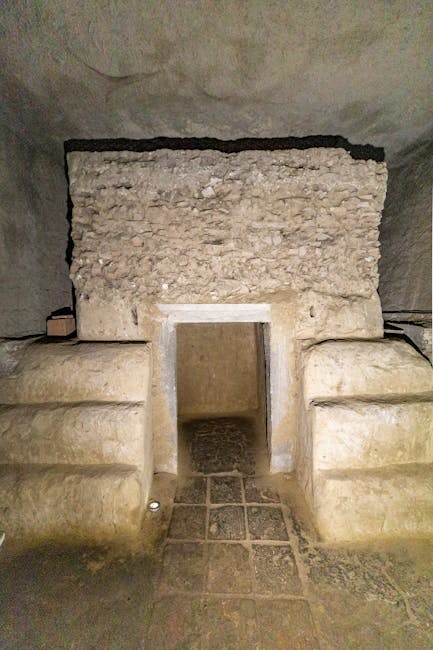
Discover Etruscan and medieval heritage: the Banditaccia Necropolis (Via dei Sepolcri, 00052 Cerveteri — UNESCO site; hours Apr–Sep 08:30–19:00, Oct–Mar 09:00–17:00, ticket around €8). In Viterbo, visit the Palazzo dei Papi (Piazza San Lorenzo, 01100 Viterbo — museum and exhibitions, hours 10:00–18:00, tickets €6–10). These visits are great options for rainy or very hot days, as museums and sites offer long opening hours.
3) Hiking and nature
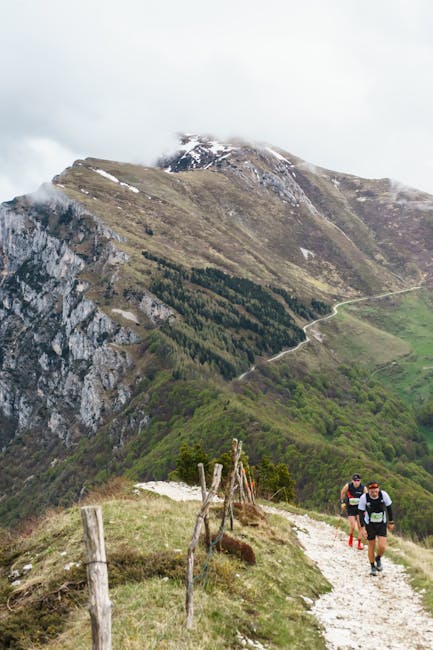
Parco Naturale Regionale dei Monti Lucretili (Visitor Center, Via Roma 28, 00010 Tivoli — hours 08:30–16:30 depending on season) offers waymarked trails, scenic viewpoints and wildlife spotting. Take the Monte Pellecchia trail for a 3–4 hour hike with views stretching to Rome. Always check visitors’ center opening hours and bring water and a printed map.
4) Culinary experiences and workshops
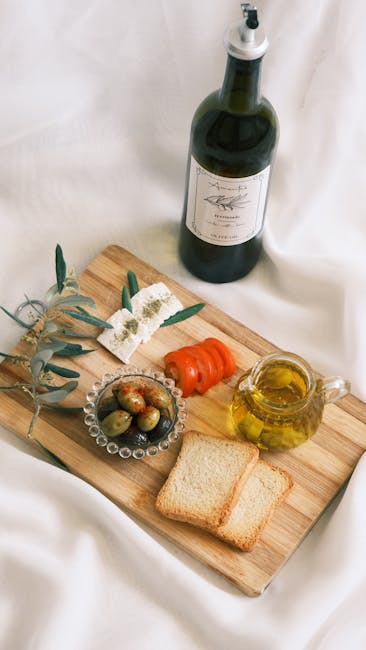
Book an olive‑oil workshop in Sabina (through Azienda Agricola Monti, Via Le Mole 2, 02033 Casperia — workshops 09:30–12:30 by reservation, price €25–40/person) or a fresh‑pasta class at an educational farm (Azienda Agricola La Fattoria, Via delle Rose 12, 01030 Viterbo — classes 10:00–13:00, €30–45/person). These experiences are perfect for understanding the terroir and bringing home edible souvenirs.
Practical tip for activities: book guided tours and workshops at least 1–2 weeks in advance, especially in high season. Check whether sites offer transfers from your trullo or if a car is necessary. Many rural accommodations offer bicycles or daily car rentals; ask about rates and conditions when booking (bike rental €10–20/day; car rental + insurance €45–70/day depending on the model).
Conclusion: why choose a modern trullo for your Lazio getaway
Choosing to stay in a modern trullo in Lazio means opting for an experience that blends rural authenticity with all the comforts of modern life. The intimate atmosphere of a trullo — thick walls, rounded volumes, conical roof — creates a unique place to rest, away from urban noise. At the same time, modern upgrades provide welcome practicality: heating for winter, insulation for summer, a fitted kitchen and sometimes eco‑friendly features like solar panels. These accommodations work particularly well for slow‑travelers, couples seeking a romantic weekend, families looking for a base to explore archaeological sites, and lovers of wine and local gastronomy.
Lazio is full of varied landscapes and cultural activities: visits to Etruscan necropolises, wine tastings in the Castelli Romani, hikes in the Monti Lucretili, olive‑oil workshops in Sabina. Staying in a modern trullo gives you a friendly and often well‑located base for day trips. A few final tips: always check arrival conditions (check‑in hours, pet policies, extra fees for cleaning or heating), ask about the condition of the access road and parking availability, and book early for weekends and high season. If you want a pocket of calm with a strong connection to the land, pick a trullo that offers on‑site activities — tastings, workshops, guided walks — to enrich your stay.
In short, the mix of picture‑book charm and modern comfort makes these contemporary trulli a memorable lodging option in Lazio. Whether your itinerary includes Rome, the surrounding hills or Etruscan sites, a modern trullo becomes an ideal country home: intimate, photogenic and deeply rooted in the landscape. Close the stone door, let morning light caress the white walls, and savor this rural pause where time seems to slow down.